




For years, India’s real estate map was drawn around a handful of large cities. Delhi-NCR, Mumbai, Bengaluru, Hyderabad and a few others absorbed most of the attention, capital and new supply. The map looks less concentrated now.
 |
Tier-2 cities are emerging as key real estate growth destinations, driven by infrastructure, connectivity and urbanisation
A recent CII-Knight Frank study puts residential price growth across 11 emerging markets at 63% between 2021 and 2026, compared with 42% across India’s eight largest cities. Chandigarh Tricity and Lucknow are among the markets identified in the study. The numbers are significant, but the more interesting change is what is happening underneath them. These are increasingly cities with their own economic pull, rather than markets waiting for a metro to spill over into them.
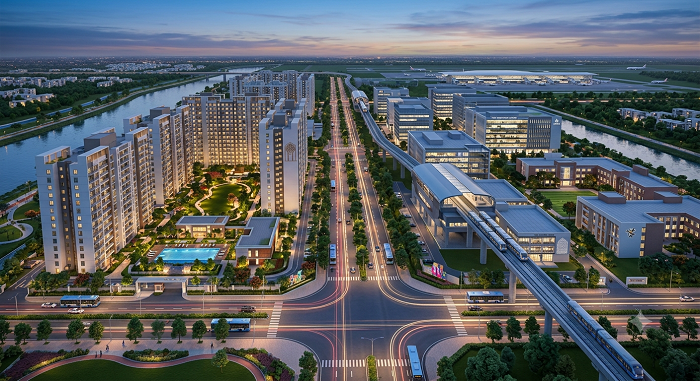
Chandigarh Tricity offers a particularly clear example. Chandigarh itself has limited room for physical expansion, while Mohali and New Chandigarh have become increasingly important to the wider urban economy. Airport Road, regional road connectivity and the presence of education, healthcare and professional services have added to the appeal.
Umang Jindal, CEO, Homeland Group, said, “Tricity is increasingly being experienced as one connected market rather than three separate locations. Mohali’s growth has brought residential, commercial and social infrastructure closer to the expanding employment base, while the airport corridor has changed the importance of several locations. Buyers are also looking beyond the apartment itself and considering the surrounding ecosystem, access, retail, education and everyday convenience. That is gradually giving the region a more complete urban character.”
Gurinder Bhatti, Chairman & Managing Director, GB Realty, said, “The next phase of development in the Tricity is likely to be shaped by how well infrastructure and new residential districts work together. New Chandigarh and the Mohali belt are attracting attention because they are evolving into self-sustaining urban destinations rather than remaining peripheral extensions of the existing city. With improving connectivity and a growing ecosystem of commercial, institutional and social infrastructure, these markets are increasingly positioned to support sustained residential demand. This is the kind of urbanisation that creates a longer residential cycle rather than a short-term development pocket.”
Tejpreet Singh Gill, Managing Director, Gillco Group, said, “Punjab’s real estate story is increasingly linked to the way Chandigarh, Mohali and the surrounding urban areas are developing together. Infrastructure has made several locations more accessible, but the larger change is the emergence of a broader residential and commercial ecosystem. Buyers are looking for well-planned projects, while businesses and institutions are creating demand around them. That combination is giving the region a different scale of opportunity than it had a decade ago.”
A similar trend can be seen across other emerging urban markets, where improving infrastructure, evolving buyer preferences and expanding city boundaries are influencing the way residential development is taking shape. In this context, Lucknow is also witnessing a gradual shift in how and where demand is emerging.
Mr. Neeraj Gulati, Managing Director, Assotech Realty, said, “Emerging cities are being evaluated on the basis of new parameters. For example, Shirdi is a very different real estate story from a conventional real estate market. The strength of the destination comes from the steady flow of pilgrims, but today’s traveller also expects a certain level of comfort and hospitality around that visit. That is creating an interesting space between tourism, spirituality and real estate. A well-managed hospitality asset can become part of that experience rather than simply being a place to stay. The opportunity lies in understanding the character of the destination and building around the way people actually travel, stay and spend time there. In places such as Shirdi, the spiritual purpose of the journey remains central, but the expectations around the journey itself are changing.”
Kushgra Ansal, Director, Ansal Housing, said, “Connectivity has changed the way smaller cities and regional markets are viewed. In Haryana and Punjab, better road networks, expanding urban centres and stronger links with established employment hubs are bringing more locations into consideration for both homebuyers and developers. The demand is not confined to one type of buyer either. There is a wider base of families looking for better housing within the region, while business activity is creating new residential requirements around emerging urban corridors.”
Harvinder Singh Sikka, Chairman, Sikka Group, said, “The interesting change in Lucknow is the way demand is spreading across established as well as newer parts of the city. The buyer is more informed and has clearer expectations about location, planning and the amenities that should be available close to home. As infrastructure improves, residential development is also beginning to follow a broader urban pattern. This creates opportunities for projects that are planned around how people actually live, rather than around a single building.”
For developers, the new map is therefore not simply a list of smaller cities with rising prices. It is a map of where infrastructure, employment, urbanisation and buyer aspirations are beginning to overlap. The next real estate markets may not be the cities waiting to become the next Delhi or Mumbai, but the ones developing enough economic and urban depth to define their own markets.
